 Uni Africa Auto Everything About Cars
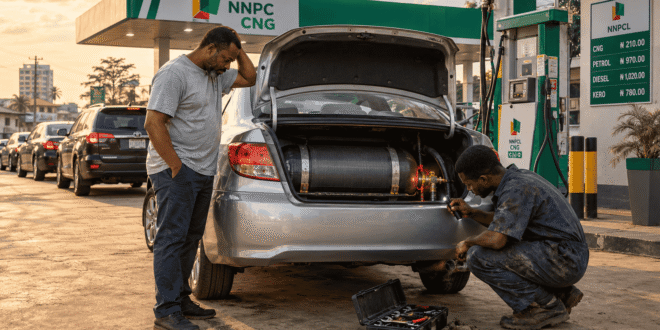
CNG conversion problems in Nigeria are something a lot of car owners only discover after they have already spent the money. You hear about the savings. Petrol is expensive, CNG is cheaper, the government is pushing it, and your neighbour’s Uber driver swears by it. So you find a workshop, pay between ₦350,000 and ₦600,000, and drive out thinking you have cracked the code.
Then things start happening.
Not immediately in every case. Sometimes it takes weeks. But CNG conversion problems in Nigeria have a pattern, and understanding them before you convert could save you a serious amount of money, stress, and, in some cases, your life.
What CNG Conversion Actually Involves
Converting a petrol car to run on compressed natural gas means fitting a high-pressure gas cylinder in your boot, a pressure regulator, injectors, a solenoid valve, and an ECU that manages the switch between gas and petrol. It sounds straightforward. But the quality of the kit used and the skill of the installer make a massive difference in what happens next.
This is where most CNG conversion problems in Nigeria begin.
7 Dangerous CNG Conversion Problems in Nigeria Every Driver Must Know
Problem 1: Poor Quality Kits Installed by Unqualified Workshops
The Nigerian CNG conversion market has exploded, and not everyone converting cars knows what they are doing. Cheap imported kits with substandard regulators and injectors flood the market. Some workshops are learning on your car.
A badly installed kit means gas leaks, pressure fluctuations, and ECU mismatch with your engine’s fuel management system. Your car starts misfiring, idling roughly, or simply refusing to run on gas after two months.
Problem 2: Boot Space Loss and Cylinder Safety
The CNG cylinder lives in your boot. On a standard sedan, that cylinder takes up most of the storage space you had. Beyond convenience, there is a safety concern here. A cylinder that is not properly secured, not regularly inspected, or sourced from a questionable supplier is a pressurised container riding behind your rear seats.
CNG conversion problems in Nigeria include cases where cylinders have not been hydrostatically tested as required. That is a risk most drivers are not told about when they sign up for the conversion.
Problem 3: Reduced Engine Power
CNG has a lower energy density than petrol. After conversion, most drivers notice that the car feels slightly less responsive, especially on overtakes and highway acceleration. For some engines this gap is small. For others, especially older or smaller displacement engines, it is noticeable.
Nobody tells you this at the workshop. They want the sale. You find out on the Abuja expressway when you try to overtake a truck and the car hesitates.
Problem 4: CNG Station Availability Is Still Very Limited
One of the biggest practical CNG conversion problems in Nigeria is that the filling infrastructure is simply not there yet. NNPCL and some private operators are building it, but outside Lagos and Abuja, finding a functional CNG station on a long-distance trip is genuinely difficult.
You end up switching to petrol anyway, which defeats part of the purpose, and you are driving around with a half empty gas cylinder that is now just dead weight.
According to NNPCL’s CNG initiative updates, the rollout is ongoing but station coverage remains uneven across states as of 2025.
Problem 5: ECU Conflicts and Sensor Errors
Modern cars have sophisticated engine management systems. Adding a third-party CNG ECU that talks to your existing engine ECU does not always go smoothly. Check engine lights appear. Oxygen sensor errors come up. The car switches between gas and petrol unexpectedly.
These CNG conversion problems in Nigeria are frustrating because diagnosing them requires equipment most mechanics outside specialist workshops do not have. You end up going back to the converter repeatedly, and each visit costs time and sometimes money.
Get your CNG system and engine ECU properly diagnosed at Uni Africa Auto repairs if you are experiencing post-conversion engine behaviour issues.
Problem 6: Warranty on Your Car Goes Out the Window
If your vehicle is still under any form of dealer warranty, CNG conversion problems in Nigeria extend beyond the mechanical. Fitting a third-party gas system typically voids your manufacturer warranty. A fault that would have been covered suddenly is not, because the car has been modified.
This catches people off guard, especially buyers of newer Tokunbo vehicles still within their mileage warranty window.
Problem 7: Long-Term Engine Wear Is Still Poorly Understood Locally
CNG burns hotter than petrol in some configurations. Valve seat wear is a documented issue in older petrol engines not designed for gas combustion. Some converted cars in Nigeria are already showing unusual valve and head wear after 40,000 to 60,000 km of heavy CNG use.
The long-term data on this in the Nigerian context is still being gathered. What is clear is that regular servicing becomes even more important after conversion. Skipping oil changes or ignoring valve clearance checks on a converted engine is a shortcut to bigger engine problems down the road.
Find quality engine maintenance parts for CNG-converted vehicles at Uni Africa Auto store to stay ahead of wear.
Should You Still Convert?
CNG has genuine benefits. The fuel savings are real, especially for high mileage drivers covering Lagos or Abuja daily routes. But go in knowing the full picture.
Use a certified, reputable conversion workshop. Insist on a quality kit with proper documentation. Budget for regular inspections of the cylinder and regulator. And keep your petrol system in good working condition because there will be days you need it.
The savings are real. So are the CNG conversion problems in Nigeria when corners are cut.
Have you converted your car to CNG? What has your experience been like on Nigerian roads? Drop your honest take in the comments below and share this with someone sitting on the fence about converting.