 Uni Africa Auto Everything About Cars
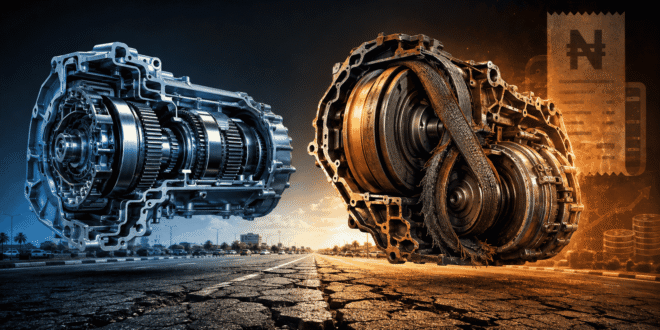
The downside to CVT transmissions is something most Nigerian car buyers never think about until it is too late. You walk into a car lot, the dealer tells you the car has a CVT gearbox, and it sounds impressive. Smooth. Fuel efficient. Modern. You buy it. Then eighteen months later you are sitting in a mechanic’s workshop in Ikeja or Wuse market getting a repair bill that makes your chest tighten.
CVT transmissions have real advantages. But they also have a side that nobody talks about enough, especially in the context of Nigerian roads and our driving conditions. Let’s get into it honestly.
What Is a CVT Transmission?
CVT stands for Continuously Variable Transmission. Unlike a traditional automatic or manual gearbox that shifts between fixed gears, a CVT uses a belt and pulley system to deliver seamless, stepless acceleration. There are no gear steps. The engine simply finds the most efficient ratio at any given speed.
That sounds great in theory. And on paper, fuel economy numbers look impressive. But the downside to CVT transmissions becomes very clear once real-world conditions enter the picture.
7 Ugly Truths About the Downside to CVT Transmissions
Truth 1: CVT Repairs Are Brutally Expensive in Nigeria
This is the biggest one. When a traditional automatic gearbox develops a fault, experienced Nigerian mechanics can often rebuild it locally using available parts. A CVT is a different animal entirely.
The belts, pulleys, and control units inside a CVT are highly specialized. Most local mechanics do not have the equipment or training to work on them properly. You end up at a dealership or a specialist workshop, and the bills are not friendly. A CVT replacement in Nigeria can cost anywhere from ₦400,000 to over ₦1,000,000 depending on the vehicle.
Truth 2: CVT Transmissions Do Not Like Our Roads
Nigerian roads are not exactly CVT friendly. The constant stop-and-go of Lagos traffic, the potholed expressways between cities, and the load stress of driving with full passenger capacity every day — all of this puts strain on a CVT system that was designed for smoother, more consistent driving conditions.
The downside to CVT transmissions in this environment is that the belt and pulley system wears faster under the kind of stress Nigerian roads deliver daily.
Truth 3: The Driving Feel Puts Many People Off
Ask any driver who switched from a traditional automatic to a CVT about the feeling and you will hear the same complaint. When you accelerate hard, the engine revs high and stays there while the car builds speed gradually. It feels disconnected, like the engine and the wheels are not talking to each other properly.
Nigerians who are used to the decisive gear shifts of a traditional automatic often find this feeling genuinely unsettling. It is one of the less discussed downsides to CVT transmissions, but it affects daily driving satisfaction in a real way.
Truth 4: CVT Fluid Maintenance Is Strict and Often Ignored
Every CVT depends on clean, properly functioning transmission fluid to protect the belt and pulley system. The manufacturer’s service intervals for CVT fluid are strict and not optional.
The downside to CVT transmissions for Nigerian drivers is that many people either do not know this or choose to skip it to save money. Skipping CVT fluid changes is one of the fastest ways to destroy the transmission. And as we already established, replacing it is not cheap.
According to Consumer Reports’ transmission reliability data, CVT-equipped vehicles consistently rank among the most complaint-heavy in terms of transmission issues when maintenance schedules are not followed strictly.
Truth 5: They Are Not Built for Towing or Heavy Load
If you regularly carry heavy loads, drive with a full car of passengers, or occasionally tow anything, a CVT transmission is going to feel that stress quickly. Traditional automatics and manuals handle torque loading far better than a belt-driven CVT system.
Many Nigerian family cars double as load carriers, especially during festive seasons when the entire family plus luggage needs to make the trip from Lagos to the village. That kind of use accelerates CVT wear significantly.
Truth 6: Spare Parts Are Not Widely Available
Walk into any major spare parts market in Lagos or Kano looking for CVT components and you will quickly understand another major downside to CVT transmissions. Parts availability is poor compared to traditional gearbox components.
This means longer waiting times, higher import costs, and the very real possibility of your car sitting idle for weeks while you wait for a part to arrive. For someone who depends on their car daily, this is a serious problem.
Get your CVT transmission inspected early and regularly at Uni Africa Auto repairs to catch issues before they become expensive emergencies.
Truth 7: Resale Value Takes a Hit
A car with a CVT transmission that has high mileage or a known history of transmission issues will struggle in the Nigerian used car market. Buyers are increasingly aware of the downside to CVT transmissions, and many deliberately avoid them when buying Tokunbo vehicles.
This affects what you can realistically expect to get when it is time to sell. A traditional automatic or manual gearbox car of the same age and condition will almost always attract more buyers and a better price.
Browse well-maintained, properly inspected vehicles at Uni Africa Auto Car Dealer to make a smarter buying decision from the start.
So Why Aren’t All Cars Using CVT If It’s So Efficient?
Exactly because of everything above. Manufacturers who tried going fully CVT across their lineup faced reliability complaints, costly warranty claims, and customer dissatisfaction. Nissan, Honda, and Subaru have all made headlines globally for CVT-related problems in certain models.
The fuel economy benefits are real, but they come with tradeoffs that many drivers, especially in markets like Nigeria, simply cannot afford to manage.
Final Thoughts on the Downside to CVT Transmissions
The downside to CVT transmissions is not a reason to panic if you already own one. It is a reason to maintain it properly, use the correct fluid, avoid overloading the car, and service it on schedule without cutting corners.
But if you are about to buy a car and CVT vs. traditional automatic is the choice in front of you, go in with both eyes open. Know what you are signing up for. The smoothness and fuel savings are real. So is the repair bill when things go wrong.
Do you own a CVT car? Has it given you problems on Nigerian roads? Drop your honest experience in the comments below and share this post with someone who is about to buy a CVT vehicle.