 Uni Africa Auto Everything About Cars
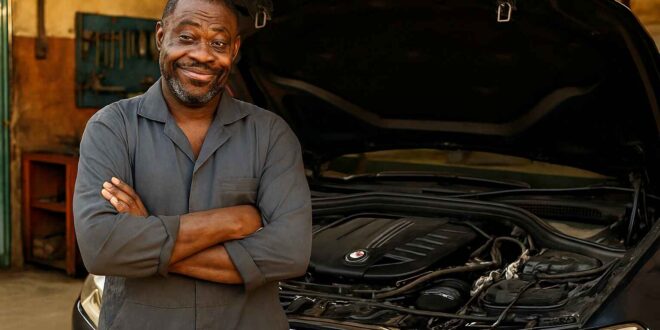
German cars like BMW, Mercedes, and Audi are respected worldwide for their engineering. In Nigeria, many drivers admire them for their comfort, power, and prestige. Yet, when these cars enter the workshop, many mechanics hesitate. The reasons are practical, not emotional.
First is the heavy use of electronics. German cars rely on advanced computers for almost every function. You cannot diagnose problems by ear or simple checks. You need specialized scanners and software, which most workshops in Nigeria do not have.
Second is the issue of tools. Standard spanners and sockets are not enough. Many German cars require unique tools designed only for them. Without these tools, mechanics risk damaging sensitive parts.
Third is the engine design. The engine bays are compact and tightly arranged. Reaching one small sensor or belt often means removing several other components. This increases labor time and the chance of new faults during repair.
Fourth is the cost and availability of parts. Genuine German car parts are expensive and often difficult to source in Nigeria. Fake parts flood the market, and when installed, they cause repeat failures.
Finally, German cars demand precision. They are engineered for exact specifications and do not tolerate shortcuts. A quick fix that works on a Toyota or Honda will usually fail on a BMW or Mercedes.
The hesitation of Nigerian mechanics is not a lack of skill. It is the lack of specialized tools, training, and access to reliable parts that makes these cars a challenge.
If you own a German car, it is important to take it to workshops that specialize in European models. This will save you money, time, and stress in the long run.
For professional and reliable service for your European car, visit https://repairs.spotdem.com/ and let real experts handle the complex jigsaw.